

Viktor Ullmann
1898–1944
Life
Viktor Ullmann was born on 1 January 1898 in the Silesian town of Teschen, but grew up in Vienna. There he studied with Arnold Schoenberg, whose composition seminar he attended in 1918, and also received lessons from Alois Hába. After early professional positions as a conductor and in the book trade, he was music director at the Zurich Schauspielhaus from 1929 to 1931, before returning to Prague in 1933 as a freelance musician.
With the National Socialist destruction of Czechoslovakia, his situation became increasingly threatening from 1939. In 1942 the Nazis deported him to the Theresienstadt ghetto. Despite the conditions of imprisonment, a considerable late body of work came into being there. In October 1944 Ullmann was murdered in Auschwitz-Birkenau.
Works and Style
His early compositions clearly bear Schoenberg's hallmark, particularly in their harmonic and formal design. Later Ullmann combined tonal elements with twelve-tone techniques to form an independent musical language. His songs also reveal the influence of Gustav Mahler.
In Theresienstadt he wrote, among other things, seven piano sonatas, the last three of which were composed in captivity, as well as chamber music and songs. Yiddish and Hebrew songs also belong to this late work, which moves between seriousness, irony and hope.
Well-Known Works
His best-known stage work is the chamber opera "Der Kaiser von Atlantis oder Die Tod-Verweigerung" to a libretto by Peter Kien. The allegory of Death and the Harlequin was composed in 1943 and 1944 in Theresienstadt; the premiere did not take place until 1975 in Amsterdam. Other important works include the "Variations and Double Fugue on a Theme by Arnold Schoenberg", the Piano Concerto of 1939, the melodrama "Die Weise von Liebe und Tod des Cornets Christoph Rilke" and String Quartet No. 3 op. 46. The overture to "Der zerbrochene Krug" op. 36 also belongs to his output.
Concert Life Today
Ullmann's music is regularly heard in German-speaking countries, often within programmes about persecuted composers. In November 2026 his work is featured in the Philharmonie Essen: the Essener Philharmoniker under Daniel Cohen play the overture to "Der zerbrochene Krug" alongside Mozart's Clarinet Concerto with Julien Floréani and Dvořák's Symphony No. 7. In Berlin he is performed at the Raum für Kunst und Diskurs Nemtzov&Nemtzov in the programme "Das Wunderkind und der Wiederentdecker", and in the Kammermusiksaal der Stadt he belongs in October 2026 to a series titled "Verfemte Musik", together with Weinberg and Shostakovich.
In Bonn his Hölderlin songs can be heard in September 2026 with soprano Katrīna Paula Felsberga and Lal Karaalioğlu at the piano at the beethovenhalle. For April 2027 an evening with the Jenaer Philharmonie under Mihkel Kütson is announced in Jena, featuring his melodrama setting of the Rilke text with recitation by Frederik Beyer in the Volkshaus. Earlier, String Quartet No. 3 was heard in the Frauenkirche in Dresden, and at the Goetheanum in Dornach a song evening in 2024 commemorated the 80th anniversary of the composer's death.
Upcoming concerts featuring works by Viktor Ullmann
Thursday 26 November
19:30The Wunderkind and the RediscovererCharlotte Melkonian (Violoncello) Jascha Nemtsov (Klavier)Nemtzov&Nemtzov – Raum für Kunst und Diskurs, Berlin19:30Julien Floréani (clarinet), Essener Philharmoniker, Daniel Cohen (conductor)Julien Floréani (Klarinette) Essener Philharmoniker Daniel Cohen (Leitung)Philharmonie Essen, EssenThursday 8 April
19:30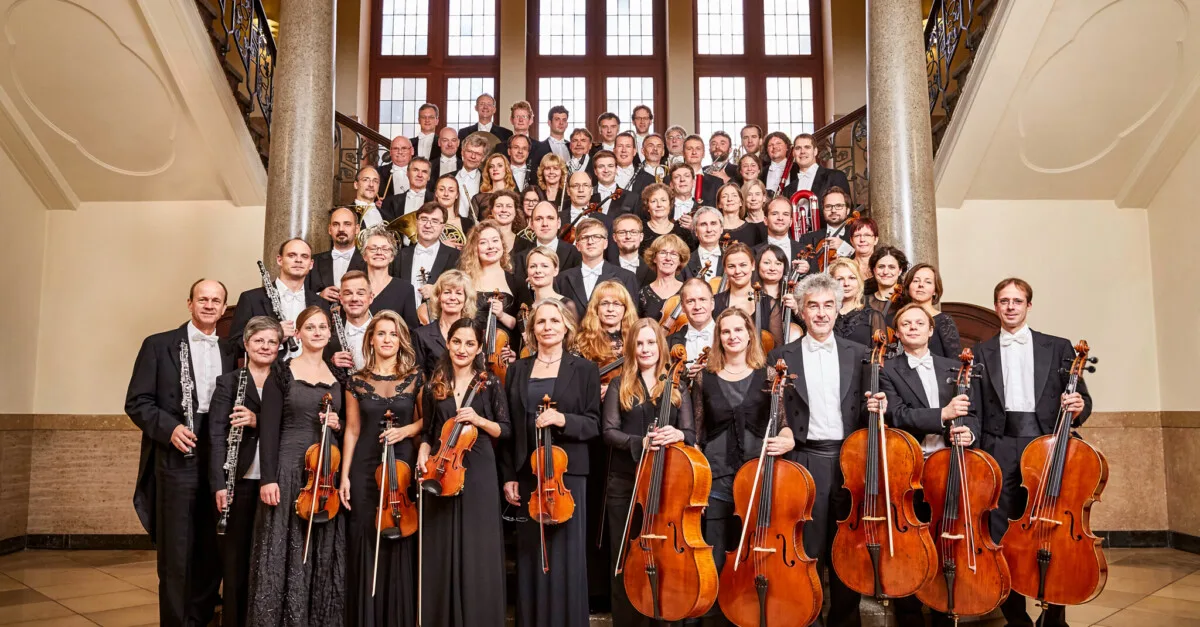 Jena Philharmonic, Mihkel Kütson (conductor), Frederik Beyer (recitation)Jenaer Philharmonie Mihkel Kütson (Leitung) Frederik Beyer (Rezitation)Volkshaus, Jena