

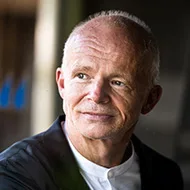
«I learn every day!»
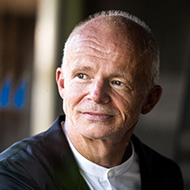
Thomas Zehetmair enjoys the greatest international esteem as a conductor, soloist, in a dual role, and as a chamber musician. He is Music Director of the Orchestre National Auvergne Rhône-Alpes, and his position as Chief Conductor of the Stuttgarter Kammerorchester has been extended until summer 2029. In recent years, Zehetmair has developed an increasing passion for composing and arranging. For his diverse artistic work, Thomas Zehetmair has received, among other honours, the Honorary Certificate of the Preis der Deutschen Schallplattenkritik, and he is an honorary doctor of the Hochschule für Musik Franz Liszt in Weimar and of Newcastle University.
How would you describe your musical personality in a few words?
Curious, thorough, a mixture of a researcher's drive and a delight in the spontaneously shaped moment.
What continues to drive you after so many years in the musical world?
I learn every day! Then there is the contact with the audience – I increasingly think that a short spoken introduction creates closeness and helps listening. Or indeed every single moment I am privileged to spend as a performer with brilliant music, every moment of working with wonderful musicians, every moment I spend with my Stradivarius or my new violins. And in recent years my work as a composer – it began with engaging with and completing fragments such as Mozart's Sinfonia Concertante K. 320e, and then my own new pieces such as my String Trio came along.
Is there a common thread running through your artistic work?
At the moment it is the recording of all of Beethoven's symphonies with the Stuttgarter Kammerorchester, a truly exciting engagement with works that have been important to me since my youth.
Are there works you prefer to conduct rather than play – or the other way round?
I often perform Mozart's violin concertos in a dual role. Otherwise the repertoire hardly overlaps – I have performed a few pieces in both roles: Schoenberg's "Verklärte Nacht" as a violinist and later as conductor of the Stuttgarter Kammerorchester – that helps with the overall picture and is more exciting.
Which aesthetic principles are indispensable to you in an interpretation?
How does one strike the balance, in answering this question, between too many details, which would go beyond the scope here, and overly grand philosophical reflections… but perhaps that is precisely the right answer: to exhaust every detail and set it within the right frame, in order to grasp the large form.
What makes working with an orchestra productive for you?
When I manage to awaken genuine interest, and when the level of the players is right – these usually go hand in hand.
How do you manage to develop a shared sound concept in a short rehearsal period?
I recall an interview with Karajan in which he said, in substance, that in his work with singers he would bring it about that the singers were keen to sing the way he wanted. When that succeeds with the musicians of the orchestra, those are moments of pure joy.
What role does trust play in conducting?
That follows on from my previous answer: I have absolute trust in the musicians I work with when I step onto the concert platform! Otherwise I would have missed my vocation – a conductor sounds only through the music he draws out of his orchestra.
What do you expect of musicians – and what may they expect of you?
The best preparation and openness – on both sides!
What insights from chamber music do you carry into your conducting?
…and vice versa! Interpretation never stands still; everything is in flow. It makes a huge difference which voices one focuses on; the orchestral, sensuous sound of a string quartet is just as important as the transparency of a symphonic work.
Was there a key moment that shaped your career?
There are several, for example
- the moment when I was suddenly asked to become Chief Conductor of the Royal Northern Sinfonia, and my first Beethoven cycle with that orchestra;
- countless moments with Frans Brüggen as conductor, and above all Beethoven's Violin Concerto, where there was an instant spark.
- Most recently: the engagement with Brahms's quartets with the Zehetmair Quartet and the resulting CD production for ECM, which is dedicated to our cellist Christian Elliott, who sadly did not live to see the release.
Which performances or projects have stayed especially in your memory?
Three exciting projects from last year that I experienced as a composer: the world premiere of my "Passacaglia, Burleske und Choral" with the Orchestre National Auvergne-Rhône-Alpes, followed by a US tour; the world premiere of my double concerto at the Swiss Chamber Concerts in Geneva in September – and the trip to Japan with the Stuttgarter Kammerorchester in November, on which I was active in a triple role – composer, conductor and soloist.
What passions do you have besides music?
Chess addiction – sometimes far too time-consuming –; swimming in natural waters, whatever the season; following alpine skiing and ski jumping…
Interview by Florian Schär | Classicpoint.net | 01.02.2026
Photo: Wolfgang Schmidt