

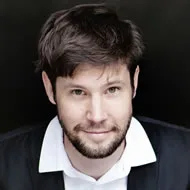
« As an artist, only one thing counts: absolute honesty. »
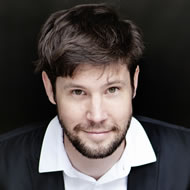
Stefan Temmingh belongs to the young generation of world-class recorder players. Born in Cape Town, he comes from a South African-Dutch musical family and today lives in Munich. This year he was awarded the Echo Klassik as Instrumentalist of the Year.
Classicpoint.net: You were awarded the Echo Klassik as Instrumentalist of the Year this year. Were you surprised?
Yes, very! At first I thought a friend was pulling my leg when I received the email. But then I saw who was copied in and knew it was true! I wasn't allowed to tell anyone until the next day. That was really hard.
What does this prize mean to you?
My mother, who is a director, taught me to be very cautious with prizes and awards. As an artist, only one thing counts: absolute honesty. Only in this way can art truly unfold from the soul. That is why I am careful not to overrate the significance of this prize.
What has changed since then?
Actually, not much. I see the matter more holistically. I am one of three or four recorder players with this distinction. My instrument is increasingly being recognised and is no longer seen as a children's toy.
You played on a plastic recorder that you could clean in the dishwasher until the age of 17. What was the feeling and the transition to the wooden recorder like?
Naturally, it was an absolute "eureka moment". The tonal possibilities are many times greater. The second "eureka moment" was when I received my first recorder from the Swiss instrument maker Ernst Meyer. These recorders had a significant influence on me as a player. Unfortunately, Ernst passed away this summer. For the world of recorder playing, this is a great loss.
Is the recorder really the best instrument to start with?
I don't think one can say that a particular instrument is the best starting instrument. I believe that an instrument either awakens a child's inner voice or it doesn't. So for one child the recorder is an ideal way in, and for another child it is the violin.
The instrument is burdened with many prejudices. How did your environment react when you decided to make a career with the recorder?
Frankly, I never asked. My mother likes to tell today how, as a boy, I told her that I was raising myself! There is some truth to that. I mostly pushed through my own plans, and what others said was and still is essentially all the same to me.
Alongside early music, you also play many premieres and commission new works yourself. How open are composers to the recorder?
Composers today always have to find new sounds, and the recorder is especially useful here because it is not as well known as other instruments. Added to this is the bonus that the recorder, precisely because of its simple construction, offers so many different playing possibilities.
Do you play only original repertoire, or also transcriptions and arrangements?
I play both. My debut CD featured violin sonatas by Corelli, which were already transcribed for the recorder in the 18th century. My second CD was Handel's opera arias, which were likewise Baroque arrangements. My third CD features Bach keyboard suites arranged for recorder, viola da gamba and lute. So I am not at all shy about changes of scoring. What ultimately matters is only whether it "sounds" right. But in the near future I will focus more on original repertoire.
You come from South Africa and lived there as a boy. How strongly did you experience apartheid yourself?
Very strongly. As a little boy, my parents made it very clear to me how unjust the apartheid regime was. Even as a child I absolutely did not understand this racial segregation. During the political upheaval I was at primary school and, for example, experienced Mandela's first public speech after his release live.
What else interests and occupies you besides music?
Enjoyment. I am a passionate cook, read cookbooks every day, and when I am at home I enjoy cooking very much. For me, enjoyment also means looking at an autumn leaf with pleasure, and not just drinking a good red wine.
Interview by Florian Schär | Classicpoint.net | 1.11.2016
More interviews
All interviews →


