

«It is the combination of nature and music at the highest level.»
«It is the combination of nature and music at the highest level.»
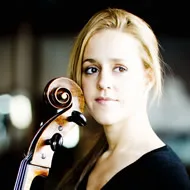
The Argentine musician, born in 1981 and resident in Switzerland, is celebrated throughout the world. Her international career was launched in 2004, when she won the prestigious «Crédit Suisse Young Artists Award», one of the most generously endowed awards for young musicians. The prize-winners' concerts in autumn 2004 with the Vienna Philharmonic under the direction of Valery Gergiev opened many great doors for Sol Gabetta in the music world. Today she can be found on all the major stages of the world. Since October 2005 she has taught as assistant to Ivan Monighetti at the Music Academy in Basel. She is also the initiator of the SOLsberg chamber music festival in the Swiss village of Olsberg.
Classicpoint.ch: You grew up in Argentina and now live in Switzerland. Where do you see the differences between the two countries with regard to classical music?
Classical music is simply more developed here in Europe than in Argentina. It is promoted more and better supported. I think Germany has the greatest density of cultural offerings. It is a luxury for all musicians to live in Europe and to discover and experience the various cultural histories, be it of music or of other arts. That is simply much more difficult in Argentina. Even the geographical situation is a hindrance. The distances between the cultural centres are great. In Europe, by contrast, there is an incredible density of cultural centres in a small area.
Do you ever miss Argentina, your birth country?
I miss the warmth of the people, the good food and the climate in the south! My family has lived in Europe since I have been here. That helps a great deal in finding emotional stability alongside concert life.
You are also half Russian. Do you have a special connection to the music of Russian composers?
I have a special bond with Russia and Russian culture. My grandparents were both 100% Russian, and as children we always ate Russian food. My grandparents also sang to me in Russian when I was little. After that I studied for 10 years with Ivan Monighetti. He was one of the last students of the Rostropovich class in Moscow and is himself Russian. I then studied for another 5 years in Berlin with David Geringas, who was also a pupil of Rostropovich. My entire life and studies have been shaped by Russian culture.
I love Russian composers, above all Shostakovich and Prokofiev, who portray in their music a political revolution and the suffering of this people. But Rodion Shchedrin is also a magnificent composer whom I greatly admire and enjoy playing.
You have studied with Ivan Monighetti and David Geringas. What distinguishes these two teachers, and how do they differ?
Ivan Monighetti is my musical and cultural father and mentor. I still play for him now and then. He not only gave me cello lessons but also general cultural instruction. With every piece I learned, he also taught me about the life of the composer and the history of the period. In this way I gained a valuable access to the pieces. It was always important to him that I slept well, went for walks and ate healthily, so that I would find a balance between body and soul. Of course he also challenged me greatly. This kind of teacher is almost impossible to find today. It was an enormous piece of luck for me to have met him when I was 10 years old.
I came to David Geringas much later, after I had already completed all my diplomas in Basel. I was older and somewhat more experienced in my studies and in the interpretation of a piece. Even so, David Geringas taught me a great deal. That is why I studied with him in Berlin for 5 years. He listened to and observed me without preconceptions. He sensed my potential as a person and musician, and nurtured and strengthened my profile, always with the necessary freedom. From him I learned that there is still much to discover within myself. He broadened my horizons with perspectives that were entirely new to me.
You now teach yourself as assistant to Ivan Monighetti. How would you describe your personal teaching style?
After 15 years of study with such outstanding teachers, one learns precisely what discipline and a strong will are. What the young generation of today mostly lacks is the willingness to struggle or work for something for a very long time. The world may not have become any easier, but the information is usually available before one has even developed the desire, the will and the energy to explore something. That is what I want to show my students from the very beginning. They do not play for me, nor to please me, nor merely to pass their examinations. These are momentary situations that can bring pleasure, but they cannot create any great personal development in the individual.
I try to guide my students along their own path, in search of something of their own that they can pass on in music, to experience the moment "in the music" as an event.
The "moment" has a life, an emotion, a force and individuality, which, however, sooner or later can no longer be felt as "the moment", and for which one must search very deliberately and intensively in order to sense it in music at all, and thereby to be able to lead the audience into another world.
When one sees you perform on the concert platform, your physical devotion to the music and your temperament stand out. What goes on in your mind during a concert? Are you always fully immersed in the music, do you think about the audience, or about things that have nothing to do with the concert?
During a concert I am no longer the physical person Sol Gabetta, although my hands are playing and my mind is thinking. That is very important, but at the same time secondary. Even more important is to make visible the vitality, the structure and form of the piece being performed. This can happen in many different ways and can even change from day to day. The goal, however, always remains the same.
What, do you think, should be done to make classical music accessible to a broader audience? How can more young people in particular be inspired by classical music?
Classical music inspires more young people through its intensity and energy than one might think. Many young people have never been to a classical concert, not because it is too expensive, but because they do not know it and need it the way one needs water to drink. This begins with upbringing at home in the family and at school. There, thirst must be awakened and nurtured, so that music becomes a source of spiritual water that one can no longer do without, because it does us good and gives us energy, because it is simply life.
There is no magic recipe for inspiring people to love classical music, but every person has a soul that needs nourishing.
Six years ago you founded your own festival, the Solsberg Festival. What is special about this festival?
Solsberg is my child. Together with my friend Christoph Müller I have been organising this festival for 6 years. It is the freedom in the choice of programmes and artists that makes this festival so attractive. The musicians come only when they feel like it. They play what they would like to play, and the setting is so idyllic, in the midst of wonderful nature, that it makes this festival something very special. The audience goes on a hike, eats in the village and enjoys the concert. It is the combination of nature and music at the highest level.
For the "Progetto Vivaldi" you strung your cello with gut strings. Last year you founded the Capella-Gabetta and in this ensemble you play exclusively Baroque music. How intensively do you engage with historically informed performance practice?
In September 2011 my new CD "Progetto Vivaldi 2" will be released. These projects give me great joy, especially the intensive collaboration with my brother Andres Gabetta, who organises and leads the ensemble. We have 2 tours per year with me as soloist, a summer tour and a Christmas tour, but only every 2 years. That way there is time to discover new repertoire, to study the concert programmes and, if we feel like it and it is possible, to make a CD recording.
It is not only interesting for me to play with gut strings and a Baroque bow, but also a development for me as a musician, a search at the source of music and of the instrument, in pursuit of "less is more".
Interview by Florian Schär | Classicpoint.ch | 21.07.2011