

«Music expresses nothing but itself.»
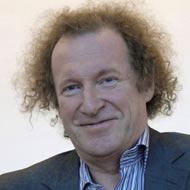
The Belgian musician Robert Groslot has made a name for himself as a pianist and, above all, as conductor of the "Night of the Proms". At this mega-event, which has taken place since 1994 and is held under the motto "The Best of 300 Years of Popular Music", Robert Groslot conducts the orchestra he founded, "Il Novecento". Although the "Night" regularly takes him to major metropolises, the 64-year-old sees himself primarily as a composer. After orchestral and solo works, he has recently released his first purely chamber music CD.
Classicpoint.ch: Mr Groslot, you are known above all as a pianist, even more so as a conductor. However, you yourself see yourself primarily as a composer, mainly of orchestral music. Now you have released your first purely chamber music CD, "Chamber Works for Clarinet". How did you experience this "chamber experiment"?
As a pianist, I have always enjoyed chamber music very much. Playing together with a small group of people – most of whom are good friends and excellent musicians – I find every time to be unique, intense and irreplaceable. Nevertheless, it took a relatively long time before I turned to chamber music as a composer. Apparently I first had to satisfy my deeply rooted need to compose works for larger ensembles and write 16 orchestral concertos... (laughs)
Which chamber compositions have you written in the past, and what experiences have you had with them?
Over the last two years I have composed numerous pieces for traditional chamber music ensembles, for example a string quartet – it bears the title "Matrix in Persian Blue" – and a violin sonata, which a year ago still seemed completely impossible to me (laughs). However, I also experimented with some new instrumental combinations, for instance in "The Phoenician Sailor", a piece for piccolo flute, cor anglais, bass trombone and piano. I view the limitations that the chamber music genre seems to have compared with orchestral music as an enrichment rather than a deficit. For here, so to speak on a small scale, entirely new possibilities for experimentation open up. Beethoven's chamber music is far more adventurous than his works written for orchestra. And, very importantly: as a composer, you write chamber music for performers whom you know very well.
How did it come about that the clarinet is at the centre of the CD recording?
All the pieces on the CD "Chamber Works for Clarinet" were written at the request of the clarinettist Vlad Weverbergh. I wrote these works within a relatively short period, and that is probably also the reason why the CD has become stylistically very unified. In "Painted Curves" I wanted to meet the traditional seriousness of the famous large clarinet quintets – such as those by Brahms or Reger – with carefree lightness. "Parfum éphémères", written for the same instrumentation as Mozart's "Kegelstatt Trio" – that is, for piano, violin and viola – consists of five quasi-impressionistic sketches. "Hoquetus, Battaglia & Madrigal" for clarinet and harp naturally refers to medieval techniques, and "Wagner's Moon" is a nocturnal reflection on the Tristan chord.
Your music for clarinet is comprehensible, accessible and at the same time very sensual and full of joy in playing. Are these qualities still "permitted" today?
We must not forget that art always arises in two phases of work: first from a concept, and second from its concrete realisation. Concepts may be more or less conscious or even purely intuitive. However, the development of a concept or idea is in any case and, in a sense, by definition sensual, because it must be perceived by the senses. In my opinion, the attempt by some composers to assign music tasks other than purely sensual ones is forced, since music expresses nothing but itself. For my part, I even experience very complex structures – such as those of my piano concerto – as something emotional and not merely governed by reason.
To what extent does your knowledge of the art of conducting benefit you when composing?
Conducting masterpieces of the past is an inexhaustible source of information, far more intensive than listening to them. A conductor becomes, so to speak, part of the piece he is conducting, both mentally and physically. This activity has also encouraged me to notate and set down my musical ideas and conceptions – tempi, nuances, articulations etc. – as precisely as possible. As a concrete example: I rarely write 5/8 bars, but always 1/4 + 3/8 or 3/8 + 1/4, so that every musician, including the conductor, immediately knows and plays the correct accentuation without losing rehearsal time. The British composer Michael Tippett, whose music I love very much, linked his compositional motifs with beams across the bars. This considerably complicates legibility. I always try to make the process of assimilation as easy as possible for the performer.
There are reservations, especially in Germany, about "composing conductors". What is your view?
Prejudices are always foolish and reprehensible. Nevertheless, it is self-evident that musicians such as Gustav Mahler, Richard Strauss and Leonard Bernstein were important conductors and at the same time great composers. Of course there are good conductors who compose less interestingly, and good composers who cannot conduct. And there were and are musicians who have no idea of either (laughs).
The music of the 20th century was – and in some places still is – shaped by ideological trench warfare. Twelve-tone music, and later serialism, were elevated to dogma, and atonality was the order of the day after the Second World War. To what extent is it important for you, in this context, to take a position yourself? And why do you write so tonally and accessibly?
This was also a major problem for me and one of the reasons why I wrote so little in the 1980s and 90s. The expansion of the seven-note scale after the use of the twelve tones is a logical further development, deeply intertwined with the nature of music. The strict avoidance of tonality and the exclusive use of serial principles seem to me, in many cases – though not always – forced. The Belgian composer André Laporte, born in 1931, who himself wrote avant-garde works, once said that tonality cannot be ignored continually throughout history. I think the development of music after the First World War is only too understandable and, in this form, perhaps even inevitable, partly because of the great tragedies of history, and partly because of the nature of music itself, whose capacities had been misjudged.
How would you describe your own style, your way of composing music?
The musical language in which I write feels entirely natural to me. I can move within it easily and freely, while at the same time it is very accessible to an experienced listener. I think my musical language is personal and recognisable. We all know that there are many problems in our world, but I find it makes little sense to constantly want to express these in music. Politics and literature are far better suited to that. With my music I want to express the experience of life itself, the joy I am allowed to experience every night and every day, the many wonders of our existence and, of course, also the eternal mystery. Above all, however, I want to give music back its smile.
Within which historical and musical tradition do you place yourself? Where do you see your intellectual and artistic roots?
I feel European through and through, and I also think that many Germanic and Latin influences can be heard in my music – perhaps that is typically Belgian? (laughs). The Anglo-Saxon tradition also plays a major role for me. "Rainfall on Pink City" and, for example, the first and last parts of "Painted Curves" have quite clearly American roots. My love of large forms – as in "The Great Globe", "Black Venus" or in some of my concertos – can undoubtedly be called Germanic. The bright colours in many compositions, on the other hand, reveal my love of everything Mediterranean. I clearly see myself as a continuator of a line that began with Beethoven and leads via Liszt, Debussy, Stravinsky, Bartók, all the way to Lutosławski and Ligeti, without wishing to compare myself with these masters.
Can, may or must music take a position in any form – in other words, and in the broadest sense, be political?
Stravinsky was right when he said that music expresses nothing but itself. Of course, many pieces of music remind us of circumstances of everyday life or even political circumstances, especially when texts are sung or set to music. But even these things remain within the realm of the associative. To want to deny the primarily purely aesthetic dimension of music is pointless, because then nothing of it remains.
How "subjective" is your music? Does the category of "existential music" or even "confessional work" still make sense today?
Every good composer constantly expresses himself. In this sense, good music is always existential. It is understandable that artists who live under difficult conditions feel the need to give expression to this in their art too. But these extra-musical ideas only work through association and not through the music itself. Some composers take themselves so seriously that the result becomes bombastic or even ridiculous. So let us rather remain modest and use the musical language as it is.
What plans and wishes do you have for the future?
I hope I may go on creating many compositions – and in genres that I do not yet know at all (laughs). Music drama also appeals to me; I would like to write an opera or make an opera film. I am not speaking here of film music – where the sounds always serve only a supporting function – but think much more of a new kind of art film, in which the sounds, texts and film sequences form an organically dramatic unity. In addition, I am contemplating a concrete plan for a large-scale orchestral work, which may then perhaps form a synthesis of my musical world (laughs).
Interview by Dr. Burkhard Schäfer as guest author for Classicpoint.ch | 1.10.2015
More interviews
All interviews →


