

« Feu sacré! is a way of life for me. »

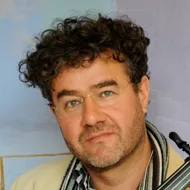
Born in 1962, the musician studied at the Conservatory of Bern, with Boris Pergamenschikow in Cologne and with Harvey Shapiro in New York. Several prizes marked the beginning of his career, and today he is counted among the most renowned cellists internationally. As a soloist and chamber musician, he regularly performs at major festivals and in well-known music centres, and works with distinguished musical personalities (such as Heinz Holliger, Mario Venzago, Dennis Russel Davies and many more) and orchestras (such as the Tonhalle Orchester Zürich, RSO Wien, Camerata Bern, Münchner Kammerorchester, Orchestre de la Suisse Romande and many others). Numerous radio and television recordings as well as record and CD releases have made him known to an international audience. Patrick Demenga leads a concert performance class at the Conservatoire de Lausanne and teaches at various international masterclasses.
In the following interview, Patrick Demenga talks about the Musikfestwoche Meiringen, his brother Thomas Demenga and his time as a music lecturer during the lockdown.
Classicpoint.net: You are artistic director of the Musikfestwoche Meiringen, which is one of the few festivals taking place this summer. How did you manage to ensure it could go ahead?
We firmly believed that there would be openings. But we kept in contact with our musicians to analyse the situation, and they were all so in favour of and ready to come that it gave us the courage to hold on. Naturally, we had to develop a protection concept, which we are now already revising. We work with distances between groups and contact tracing, as well as masks, which are available.
What is the theme of this year's festival, and how did you arrive at this theme?
Feu sacré! That means burning for something, practising something with passion. For me, this is a way of life and something that accompanies me constantly, even outside music. I consider every minute a shame in which I do something without passion. If, for example, a chef prepares a meal with feu sacré, it will delight the guest. It is exactly the same in music. I have been carrying this theme with me for a long time, and for the 60th anniversary it seems quite fitting. Without feu sacré from many people, such a festival would not have survived so long. And it is living better and better and has developed well.
How did you personally experience this Corona lockdown period?
I had the feeling that the planet had taken one deep breath in and out. In my life, everything slowed down considerably because of the lockdown. All concerts were cancelled, no more travel. I found the time restorative. I had a lot of time for myself and my family. I was fortunate to remain healthy. But I was also far away from culture, which perhaps was restful too.
You lead a concert performance class in Lausanne. How did you support and teach your students during this time?
I continued to teach. However, the teaching took place online. The conservatory was closed for in-person teaching, after all. Teaching music online posed particular challenges: most of my students come from abroad, the internet connection was often poor, and the students felt very lonely when practising. They sent videos from their rooms where they were practising, which of course was not really easy in terms of sound.
You are interested in juxtaposing great composers – great works with contemporary music. What do you see as the appeal of this musical engagement?
Every era has its own very distinctive musical language, and learning to understand these languages and discovering the messages and emotions they carry has always fascinated me. Often one finds the same archetypal feelings, but expressed with completely different means. New music opens the ears and changes listening habits, so that suddenly one hears "old" music in a completely different way.
Your brother is eight years older and is also an internationally renowned concert cellist. You have many joint projects. What was it like in your youth, having an eight-years-older brother with the same career goal?
Besides my brother, I have five other siblings, all of whom work in art, theatre and music. As the youngest child, I had grown up from the very beginning in a highly creative and musical household. My brother and I, since we both play the cello, have always shared an artistic friendship. Of course it has grown, because he was already studying abroad when I was still at music school.
When did you decide to make the cello your profession?
I was already certain as a child that I wanted to become a cellist. The warmth of the instrument, its deep sound, and then there was the inspiration from the many musicians who came and went in our house, the many rehearsals that took place there, and the sociable life that went with them.
What are your next projects?
The Musikfestwoche is my first project after the lockdown. I am especially looking forward to it. Some other projects over the summer have unfortunately been cancelled. But if everything continues to develop positively, I will play the next concerts and give masterclasses in Austria and Italy in the autumn.
What passions do you have besides music?
I am interested in philosophy, physics and consciousness research. I am also a passionate cook, enjoy being in nature, and as a Bernese, you will often find me in the Aare in summer.
Interview by Florian Schär | Classicpoint.net | 1 July 2020
More interviews
All interviews →


