

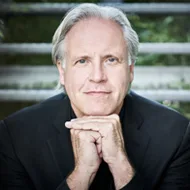
« Music is indispensable – pure life energy! »

Intelligent clarity and a profound, ever-curious musicality characterise the work of Markus Stenz. He has conducted, among others, the Berlin Philharmonic, the Gewandhausorchester Leipzig, the Munich Philharmonic, the Tonhalle-Orchester Zurich, the Vienna Symphony, the Hallé Orchestra Manchester, the BBC Scottish Symphony Orchestra, the NHK Symphony Orchestra, the Orchestre Philharmonique de Radio France, the Staatskapelle and the Konzerthausorchester Berlin, the Orchestre de la Suisse Romande, the Bamberger Symphoniker, the Dresden Philharmonic, the Philharmonisches Staatsorchester Hamburg, as well as the radio orchestras of BR, HR, WDR, NDR and MDR. In the USA he has worked with the symphony orchestras of Boston, Chicago, Cincinnati, Los Angeles, Dallas and Houston, among others.
In the following interview, Markus Stenz talks about his relationship with Haydn and Mendelssohn, his ideal of sound and his visions.
Classicpoint.net: What is your earliest musical childhood memory?
I am lying under the grand piano in our living room, listening to my father play the piano. My memories of church music are even more intense: my father is a choir conductor and organist. My mother is a passionate amateur singer with a wonderfully clear contralto voice, still today – at almost 80!
When did you decide to become a conductor, and why?
My key experience was the "Harvard Lectures" broadcast on German television – six lectures given by the American conductor and composer Leonard Bernstein at Harvard University. They struck me with tremendous force when I was 13, and in my view they remain unsurpassed to this day as a path deep into the mysteries of music.
Can you describe your ideal of sound?
Great chamber music – music in which listening to one another leads to freedom of phrasing, to vibrant transitions, to delicately felt tenderness and to overwhelming, accumulating great sonorities. And: it must be PERSONAL. Created here and now.
What visions do you have?
When the listener feels that the music is being created anew right in front of their ears, in this very moment, irresistibly, as if the composer had invented it for this very instant – that is my vision for the concert experience.
In your opinion, what can music contribute to the development of people today?
Music is irrational and, in our digitalised world, is the perfect counterweight to the reduction to facts, factual situations and the burden of facts. Music is unfathomable, cannot be digitised, and precisely for that reason is profoundly human and indispensable.
What significance does music have in your private life?
Indispensable, pure life energy!
On 20 May 2020 you conduct Schumann's Spring Symphony in Klagenfurt (Addendum: unfortunately cancelled due to Corona). Could you tell us a few words about this work and your thoughts on it?
Schumann's music is always a miracle to me. It is music very close to feeling and sensation. Even the most solid analysis cannot capture certain passages that get under the skin. The richness of imagination, the freedom of the melodic lines and the swing in Schumann's symphony are outstanding. Rarely has the awakening of spring life and spring feelings been captured more beautifully than in this music.
The same concert also features works by Haydn and Mendelssohn. What is your relationship to these two composers?
Haydn's music is a grab bag: one never knows which idea will come next. It is far more unpredictable than, say, Mozart or Beethoven. The playful element in music, everything that awakens joy in making music in the performers and wonder in the listener, is found in his music. Music as the art of the moment. Cheeky and unfiltered. It is this immediacy that fascinates me about every Haydn score. And Mendelssohn is, in formal terms, the counterpart to Haydn: all transitions are effortlessly organic. The imaginative soarings are evenly embedded in entirely convincing overall structures. What interests me about our programme is precisely this contrast: the "wild" Haydn in contrast to the "formally beautiful" Mendelssohn. And both creative and sensual paths lead to the deep and soulful music of Schumann. You see, I am looking forward to the concert.
Where do your interests lie beyond music?
Family, nature, hiking, swimming, playing chess. By the way, the lakes in Austria are particularly dear to me. What could be more beautiful in summer...
Interview by Florian Schär | Classicpoint.net | 1 April 2020
Photography: © Kaupo Kikkas
More interviews
All interviews →


