

« The exaggerated veneration of youth is particularly misplaced when it comes to the classical audience. »
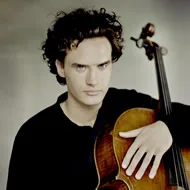
Leonard Elschenbroich has established himself as one of the most charismatic cellists of his generation. His many awards and prizes include the Leonard Bernstein Award, the Eugene Istomin Prize and the Borletti Buitoni Trust Award. He was a BBC Radio 3 New Generation Artist and received the Förderpreis from Deutschlandfunk. From 2013 to 2016 he was the first Artist-in-Residence of the Philharmonische Gesellschaft Bremen.
At the age of 5 you heard Bach's Cello Suite in C major and cried. You then wanted to learn to play this instrument. Can you remember that?
I can still see that moment in front of me, with the CD player. I was so overwhelmed and unsettled by the feeling. It was not a reaction to the emotional expression of the music, but solely to the beauty of the music.
At the age of 11 you moved from Germany to England to take lessons at the Menuhin School on a scholarship. What was that like for you?
Well, the first few weeks were very hard. Without a mobile phone or internet, you are really very far from your parents in a boarding school. The hardest thing was adjusting to practising. We had to practise 5 hours a day, and until then I had never practised for more than 1 hour. I had to learn that first. But as a child you learn quickly. I was only three years at the Yehudi Menuhin School, but almost all of my friendships today date from that time. In my memory, the Menuhin School is 'my childhood'.
You come from Germany, have also studied in Vienna and lived in London for several years. Where do you feel at home?
Berlin! I have only been living there for a year and a half, but I feel completely at home. I'm probably not the only musician there...
You founded an orchestra in Bolivia and regularly travel to Bolivia for joint concerts. Can you tell us how this came about and what this project means to you?
When I was touring in Latin America in 2012, an acquaintance asked me to play a concert in Bolivia with Miguel Salazar (then 27) and his small orchestra. The group consisted of about 15 musicians, none of them over 30. As they had no wind players, these parts had to be replaced by a pianist. Unfortunately, there was a hole in the roof of the hall where the grand piano was kept, and for days rain had dripped onto the instrument. I was supposed to play the Saint-Saëns cello concerto with them, which begins with a single fortissimo chord in the orchestra. When I came to the first rehearsal, I was so startled by this orchestral entry that I could hardly come in myself. Energy, passion, ambition and a fire for music like I had never experienced. From that moment on I knew that these musicians deserved every support, and that for the time being I would have to be responsible for it. Miguel alone handled the artistic and administrative direction, and the musicians themselves took care of ticket sales, press work, hall rental etc. There was no classical concert series in the city, no subscribers, and yet the concert was not only sold out, but some of the visitors queuing up had to be turned away outside.
The following year (2013), together with the generous support of the Hilti Foundation, we founded the Orquesta Filarmonica de Bolivia. This time we played with visiting musicians from across the country, La Paz, Tarija, Sucre, Santa Cruz. At our first concert we were already 50 musicians and played in Cochabamba, a small city at 2,500 metres above sea level, before 500 concertgoers. A year later we were 90 musicians, now including Bolivian emigrants who returned to the country specially for the concert, from Heidelberg, Oxford, Newcastle, Houston or Vienna.
This time we played in a hall with 900 seats, and over 1,000 visitors came, some of whom had brought their own chairs or had to stand. It was a huge success.
For me, the greatest joy is witnessing the commitment with which the young musicians take part in the projects. There are many strikes in Bolivia, and often lorry blockades on access roads, so that the musicians sometimes had to walk long distances with their instruments after a twelve-hour bus journey to get to rehearsal. Just imagine how a European orchestra would behave in such a situation. These musicians remind us that playing music is a privilege.
Bolivia actually has the oldest classical tradition in Latin America. In the 18th century the Spanish Jesuits introduced music in the Chiquitania rainforest and also composed locally.
There are an incredible number of very good cellists of your generation. Do you maintain friendships?
My best friend is a cellist (from the Menuhin School, of course). But otherwise I have always felt drawn to violinists. My circle of friends at the Musikhochschule Köln consisted of students of Zakhar Bron and Viktor Tretiakov.
You perform a great many concerts all over the world. Can you tell us a few anecdotes about funny incidents backstage or while travelling?
Once, at the end of an intensive concert phase, shortly before the summer break, I fell asleep on stage. At the end of the slow movement of the Archduke Trio (Beethoven). My favourite passage! Then I woke up during the concert... (though I don't think anyone noticed.)
There are currently strong efforts to make classical concerts more attractive to young people. You once said that older people should not be forgotten in this?
Older people have many qualities that are very suited to listening: time, patience, life experience. Young people are under great pressure: earning money, realising plans, starting a family. They then have to release this pressure with 'partying', alcohol and so on. During a Bruckner symphony one could write many emails or get to know people. We must lead young people to music, there is no question about that. I am doing quite a lot in this direction myself (Latin America, Rhapsody in School etc.). But the exaggerated veneration of youth is particularly misplaced when it comes to the classical audience. I am glad to see a so-called 'grey' audience in the hall. We understand each other.
You champion lesser-known works and new compositions. Which composer would you currently most like to see write a new composition?
Julian Anderson, Sofia Gubaidulina, Thomas Adès, Oliver Knussen...
You are still young. What are your visions and possible future projects?
I have been conducting since last year. I hope to be able to play the cello for as long as possible, but at the same time my attention is now very much directed towards conducting. Not only the repertoire and the sound, but also the physical aspect and the never-ending learning curve give me deep joy.
How do you find balance to music?
I go hiking in South Tyrol, where my father comes from. I would see that as balance. But more important is inspiration. I find it mainly in art, in literature about art, and in poetry.
Interview by Florian Schär | Classicpoint.net | 4 July 2017
© Photo: Felix Broede
More interviews
All interviews →


