

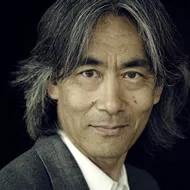
«Practising and learning did not always give me pleasure.»

Kent Nagano is regarded as one of the outstanding conductors of both the operatic and the orchestral repertoire. Since September 2006 he has been Music Director of the Orchestre symphonique de Montréal, and his contract was recently extended until 2020. Since autumn 2013 he has been Principal Guest Conductor and Artistic Advisor of the Gothenburg Symphony Orchestra. With the 2015/16 season, Kent Nagano begins his tenure as General Music Director and Chief Conductor of the Hamburg State Opera.
Classicpoint.ch: As a child you already had 12-hour days filled with school, practising and learning. Was that exhausting for you? How did you experience your childhood and your school years?
Yes, learning and practising are not always fun. And without question, it is also exhausting. Nevertheless, I could not say that practising and learning took anything away from me or my friends, or restricted us. I was quite able to coordinate it with other activities, such as water sports and surfing.
At the age of 8 you were already conducting the church choir. What fascinated you about conducting as a child?
Music interested and fascinated me. And I very quickly became aware that it has to be shaped, that sound and melody do not come about by themselves, but that people are needed for this, along with their will to shape and form it.
And what fascinates you about it today?
The sound, the melody, the rhythm – all of this requires shaping, especially in the context of works that tell great musical stories, that depict images or dramas.
You were a good friend of Olivier Messiaen, and you have since recorded his entire concert output. Can you tell us something about Messiaen as a person and about his music?
Messiaen was my teacher, mentor and friend, but above all my role model. Through him I learned what music is in its essence and in its meaning at all. From him I learned to place myself and my life in relation to the world, to other people and, indeed, to music.
Broad musical education is important to you, not only for gifted young people. How, in your view, should it be promoted?
By helping those who take their engagement with music seriously to discover and experience everything that music is, what it can be, what it tells us and what it speaks of.
You fear that classical music will become meaningless in the future, and you have also written a book about it. Can you tell us the most important points and your dream for the future?
We must open up access to the phenomena of classical music and find methods and ways to make this access as barrier-free as possible. We should find ways to turn the effort of listening to musical works into a pleasure, an experience that cannot be replaced by anything else. We should give people opportunities on a broad scale to experience music, and also to encounter it as a medium in which a great deal of human existence is told musically: of distress and suffering, but also of joy and of utopian longings.
How do you personally try to counter this development in concrete terms?
Our task in this context can essentially only be to convey the value of artistic work and the creation of works, and also the value of artistic presentation. In doing so, however, we as artists must be authentic, honest and truthful. Only in this way can we make profound experiences possible.
On 21 April 2016 you celebrate your new premiere with the Hamburgische Staatsoper. You are bringing Bach's St Matthew Passion to the stage as a staged work under the title «La Passione». What can we expect?
At this point I would prefer not to say anything about it. The circumstances of this production are unusual, as extraordinary as the Passion story of Christ itself. Yet at the same time suffering is also something entirely ordinary; it is constantly present among people and shapes life.
You are said to be a passionate surfer. Do you still go surfing?
Yes, though by now only very rarely.
Are there other passions apart from music?
Reflecting on our world, on the circumstances, and on our children and their future.
Interview by Florian Schär | Classicpoint.ch | 1.4.2016
© Photo: Felix Broede
More interviews
All interviews →


