

«That was when I first thought about giving up.»

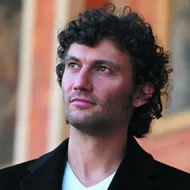
The German tenor Jonas Kaufmann is currently one of the most famous singers in the world. He is at home on the great stages, both as a concert singer and as an opera singer. Numerous awards and honours document his success.
Classicpoint.ch: You came into contact with opera at a very early age. What were those first encounters like?
Extremely positive and formative. My key experience with opera was a performance of Puccini's „Butterfly“ at the Nationaltheater Munich, a Sunday afternoon performance for children. If I remember correctly, that must have been in my first or second year of primary school, so I was 6 or 7. I sat next to my sister in the front row, right in the middle, directly behind the conductor, and I was completely fascinated. The huge space, the velvet upholstery of the seats, the stage sets, the costumes, the music… And suddenly the woman who had just stabbed herself was standing in front of the curtain and was alive again! I simply couldn't believe it. For me, opera was genuine, real and serious. That is how I experienced it, and in a way that has remained the case to this day. And I firmly believe that opera can have this same magical effect on children and young people today, despite everything that television and the internet have to offer.
You received your first individual singing lessons more or less by chance, because of the music advanced course – how did that come about?
At our grammar school there were two choirs: the junior choir for younger beginners and the chamber choir for advanced singers, and I had always enjoyed choral singing. At least two school periods a week were reserved for choir rehearsals, and before major concerts we also worked on the programme up to three times a week. And these were quite demanding programmes, with cantatas and motets, and evidently my voice must already have stood out back then; in any case, the choir director eventually gave me the tenor solos. Then one day I saw a newspaper advertisement: singers wanted for the extra chorus of the Staatstheater am Gärtnerplatz! So I signed up for an audition and, at 17, became the youngest member of the extra chorus.
When the time came to choose my advanced courses, I actually intended to take mathematics and physics. Then it turned out that only one more person was needed to reach the minimum number of participants for a music advanced course. But that would have meant practising the piano for hours every day for the required instrumental playing, and I really had no desire for that. But what if they accepted singing as a substitute discipline? So they sent me to the music academy for an audition. There, my solid command of my vocal cords was confirmed in writing, and the ministry's special permission was thereby recommended: singing as my Abitur subject in music – on the condition that I take professional singing lessons regularly. And so I went twice a week to Christof Schuppler at the music academy.
After your Abitur you began a mathematics degree. Was an alternative singing degree already an option back then?
Not for the time being. With my Abitur in hand, I followed my parents' advice in 1988 and enrolled in mathematics in Munich. It had to be something „solid“, something that would later lead to a secure job, like my father, who had a decent income and could provide for his family. Because I wanted a family too, and I was also well aware that a career in singing is a considerable gamble. Moreover, I had already met several choral singers who would have liked to become solo artists and for whom it had not worked out. I had all of this in mind when I chose to study mathematics.
What ultimately tipped the balance in favour of abandoning mathematics and beginning a singing degree?
During my mathematics studies it became increasingly clear to me that I was not born for office routine. At some point the pressure became so great that I finally registered for the entrance examination at the College of Music in the singing course. And I passed at the first attempt. Afterwards it took quite a bit of courage to hang up the supposedly safe mathematics for good.
After your studies you were immediately offered a position at the Staatstheater Saarbrücken. After the first season, however, you increasingly had problems with your voice. What exactly was going on?
My body was simply not trained enough to cope with the demanding theatre routine of a beginner. When you come from the academy, you have no idea what awaits you in your first engagement. I was really taken aback, and it went as far as a complete loss of voice. That was during a performance of „Parsifal“; I sang the role of the third squire, a so-called Wurze. All around me were Wagnerian voices, and I certainly did not want to sound like a mosquito beside them. So I gave it everything I had – and after a few phrases I was hoarse. I opened my mouth, and only hot air came out; the voice simply disappeared. The conductor looked at me in utter bewilderment. For a singer, of course, that is a nightmare. That was when I first thought about giving up: „If this is what being a singer is like, if you have to go on stage every evening with this stress, then I'll do something else, I won't put myself through this.“ Today I know what the cause was: I held on to my voice too much, I did not let it flow freely, because I had been trained for this „German sound“. Fortunately, this crisis led to one of the most positive experiences of my professional life, namely my encounter with my teacher Michael Rohdes. From him I learned to use my own voice instead of wanting to sound the way one imagines a „lyric tenor“ at the academy.
Some years later Alexander Pereira brought you to Zurich with a permanent contract. What was the time at the Zurich Opera House like for you?
Very pleasant. Zurich was the safe harbour – and at the same time the mother ship from which my international career began. When Alexander Pereira offered me a permanent contract, I initially hesitated. A permanent contract meant a straitjacket to me. But then I spoke with my Zurich colleague Oliver Widmer, and he explained to me that a permanent contract in Zurich means something quite different from what I had known until then. And he was right: it merely meant a certain number of performances; I was not bound for the entire season and could also help decide what I sang and what I did not. And of course the prospect of living in Zurich with my family and being at the theatre within a few minutes was tempting. There is a real difference between being a singer who is, so to speak, alone in the wild, living out of a suitcase, and singing at a theatre where you truly feel at home. You know every stagehand, every orchestra musician, every chorus singer and, of course, all the colleagues; you can also try out roles you may not be one hundred percent convinced of. That is why I really felt at home at the Zurich Opera.
After appearances in America and at the Salzburg Festival, you made your debut at the Metropolitan Opera in New York. What was that like for you personally?
An unforgettable day, what is called „the great breakthrough“. And I really had not expected it. The audience had come to hear Angela Gheorghiu as Traviata, and at most a few insiders in New York knew me. All the more did the audience's reaction at my solo curtain call move me: people jumped out of their seats and went wild. I simply couldn't believe it; it literally knocked me over. I only remember that I sank to my knees and thought: „Do they really mean me?“ That sounds very much like the cliché one knows from the Oscar ceremonies, but that is truly how I experienced that moment – because I would never have expected such a reaction. I had already sung the role of Alfredo several times, in Stuttgart and in Chicago, and people found it very nice. But that a whole house would be on its feet because of it, that people who did not even know me would shout bravo – I could at first hardly grasp it.
Which roles have you not yet sung, and which would you like to sing?
There are quite a few! At the very top of my wish list are Verdi's Otello and Wagner's Tannhäuser, and of course Hoffmann. The next role debut planned is Des Grieux in Puccini's „Manon Lescaut“, in June 2014 in London.
What is most important in a singer's training, and what would you advise young singers?
Always stay true to yourself, trust your own instinct, learn to distinguish good advice from bad, and make sure that body, mind and soul remain in balance.
What are your wishes for the future?
To stay healthy and to spend more time with my family.
Interview by Florian Schär | Classicpoint.ch | 4.1.2014
Photo: Dietmar Scholz
More interviews
All interviews →


