

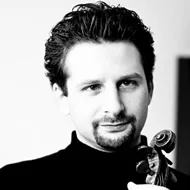
«It fits remarkably well together.»
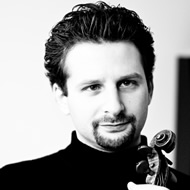
The violinist Ilya Gringolts is a lecturer at the Zurich University of the Arts. Despite his young age, he can already draw on a wide range of musical experience. He performs as a soloist with leading orchestras in Europe, gives numerous solo recitals and is also often heard as a chamber musician with his Gringolts Quartet, founded in 2008.
Classicpoint.ch: You studied with Itzhak Perlman at the Juilliard School. What was Itzhak Perlman like as a teacher for you?
«Mister P» was always a great inspiration, musically as well as personally. I experienced him live as a child already, in 1990 in Leningrad. It was an anniversary concert in honour of Tchaikovsky, and it deeply impressed me at the time. I admire his communicative skills and his consistently positive aura. As a gourmet, too, he took me to many wonderful restaurants during my student years. By the end of my studies we did drift somewhat apart artistically, but we still maintain a friendly relationship.
You won the international «Premio Paganini» violin competition and received two further special prizes: as the youngest first-prize winner in the competition's history, and for the best interpretation of the Paganini Caprices. Has your life changed since this success?
I was still a child when that happened. At that age, circumstances seem to change constantly. In fact, shortly after the competition I moved to New York to begin a new chapter. But it was a logical development. I had always wanted to perform concerts, and so it came about, first irregularly and then more and more.
The BBC selected you as one of twelve young artists for its New Generation Artists Programme. What exactly does this programme involve?
I was able to play regularly with various BBC orchestras and make recordings. In addition, recitals and chamber music concerts were arranged for me. So for over two years I was often a guest in Great Britain, and through this I got to know wonderful musicians, for example Leonard Slatkin, Ilan Volkov, Alexander Melnikov and many more.
You founded the Gringolts String Quartet. Did you choose all the other members yourself, or did this ensemble come together in a different way?
I was only one of the founders! Since my college days I had been a member of a string quartet almost without interruption. I can hardly imagine my artistic life without a string quartet. In New York I played with the Phaedrus Quartet, and through it I came into contact with the late Beethoven quartets. Later, when I came to Zurich, the idea arose, together with my wife, who had also played for five years in the Amati Quartet, to found a string quartet. We have played in our current line-up since October 2010. My wife had known the cellist Claudius Herrmann and the violist Silvia Simionescu for a long time. At a meeting at our home, we read through two Beethoven quartets and thought: it fits remarkably well together! A year later, our first recording, of Schumann quartets, was released.
You are a professor at the Basel University of Music and a lecturer at the Zurich University of the Arts. If you compare the two institutions, where do you see differences?
I stopped in Basel when I took up the post in Zurich – doing both would of course be impossible. However, I cannot yet make a comparison, as I have only been in Zurich for two weeks. I greatly enjoyed my time in Basel, but I am glad to be able to work closer to my home.
You play a Stradivarius from 1720 that is made available to you from private ownership. How did this come about, and what is your relationship with this instrument?
It is the most beautiful violin I know, and I was very fortunate to come across its owner quite by chance. I am used to changing violins regularly, but I hope I can play this instrument for a long time! The range of tone is simply bottomless.
You took part in the project «Perlen vor dem Stadelhofen» by reportagen.com, standing on the morning of 18 July 2013 in front of a Coop branch in Zurich Stadelhofen and playing Bach's Partitas for 43 minutes. How did you experience this experiment?
I had heard of a similar experiment in Washington with Joshua Bell, and I was fascinated by the idea of experiencing something like it myself. We wanted to observe people's reactions during the stressful early-morning rush. The results were similar to those with Joshua Bell. Almost exclusively women and children stopped to listen; the men just rushed past. Nevertheless, I had a liberating feeling playing on the street, despite the lack of nature. And the energy of the rush hour actually helped me!
Did it go roughly as you had imagined, or did you expect different reactions?
If I had played the same thing on the lakeside on a Sunday afternoon, people would probably have listened more. But that was precisely not the point. So the results did not surprise me. Besides, I was pleased to have outdone Josh :)
You are still very young. What plans and wishes do you have for the further course of your career?
I wish for a good balance between family (my highest priority – I have three daughters at home), concert career and teaching. I would most like not to have to give up anything!
Interview by Florian Schär | Classicpoint.ch | 4 November 2013
Photo: Tomasz Trzebiatowski