

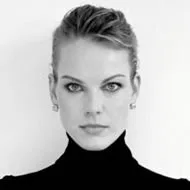
The Latvian mezzo-soprano Elina Garanča is currently the most successful mezzo-soprano, a global opera star. She achieved her breakthrough as an opera singer in 2003 at the Salzburg Festival. She is married to the conductor Karel Mark Chichon and has two daughters.
Classicpoint.net: As a child you spent a lot of time with your grandparents on their farm. Could you tell us a little about that time? Did you sing to the animals? What have you learned for life as an opera singer?
I grew up in two worlds as a child. During the winter, when I was at school, and since both my parents were musicians, I attended concerts, theatre and rehearsals. At home there were premiere parties and receptions. I lived the "Bohème" life to the full. In summer we had three months off school, and we drove to my grandparents in the countryside. There I experienced the complete life of a farming family every day – weeding, harvesting, gathering hay, feeding the animals, but also watching them being slaughtered and gutted. For my life today I have learned down-to-earthness: that you are rewarded for hard work, that nothing in life is forever, and that there are things we cannot influence. You react to the problem when it is there, not in advance.
Do your thoughts sometimes wander during a performance, for example to what you have to do tomorrow or how the children are doing, etc.?
(laughs) That is rather revealing! I must admit, yes, it has happened. I was once in New York, and my elder daughter had a severe cold at the time. She was just over a year old, had a fever, and on top of that she was teething. At night she could only sleep half-sitting, because the cough was so bad, and she only wanted to be on my lap. After such a short night, you are somewhat "out of it" even on stage. But now that is no longer the case, because I constantly have new repertoire that I enjoy very much, the children are older, and I enjoy being on stage. There I allow myself to forget everything else and simply be there for the audience, the role and the music. If something still needs to be done, I do it while I am being made up, during the interval or in the evening, when the adrenaline is still high.
Have you ever had problems with directors who asked you to do things you did not want to do?
No. If something did not quite suit me, I tried to make it suit me. I do not want to be right about everything; that would be too easy. I need obstacles and challenges so that I do not get bored.
Would you also like to direct yourself one day?
I have toyed with the idea for a long time, but the older I get, the less likely it becomes. I think I do not have the necessary patience for it. And I do not know whether I could coordinate everything and make the necessary decisions when under time pressure, which is there every day in the theatre. Unfortunately my compulsion towards perfectionism is very strong. As a singer I am responsible only for myself, but as a director... I do not know. Today I say – I will do something else when I stop singing!
You are currently among the opera singers with the greatest attention worldwide. What is it like for you to be a star?
The attention is often very exhausting, because in private I am rather shy. The "Garanča" I play in public is something different. But in the long run it is too much for me. I must be honest, though, and say that many things are much easier because my name carries some recognition, for example in a restaurant, at the doctor's or with a lawyer. As Catherine Deneuve once said, "The more famous you become, the more expensive the gifts" (laughs). But privately I value the part of my life that I can live incognito.
In the Soviet era you worked as a cleaner to have enough to eat. Did you sometimes struggle with the rapid changes you experienced?
Not struggle, but it was sometimes overwhelming. One must also say that fame came step by step and not overnight. I was a permanent member of the ensemble in three theatres and worked my way up from small roles to large ones. The attention, and also the awareness of fame and recognition, came slowly and steadily.
Does it matter to you which singing partners stand with you on stage?
Oh yes! Although I have never yet hated a partner (laughs). But especially in rehearsals there is a difference when the chemistry is right. During performances one often forgets anyway that on stage one is singing to the partner. For me the colleague becomes the character – Werther, Jose, Don Carlos, Marschallin. But especially in creative rehearsals, where one works very intimately and builds trust, one wants a colleague who is open with you, who does not think only of himself or herself but is there for you too, with whom one can try out and create a great deal on stage. I want to be able to fall in love with my partner, whether man or woman. The soul has no gender.
You have two children. Did your voice change after the pregnancies?
It has become rounder and somewhat darker; one could say more feminine, more mature, but I did not have to change fach, only develop further. There are indeed things that used to come more easily to me, but I have learned, discovered or developed a lot that is new. In principle I do not look back to the past; I work with the present and the future.
You describe yourself as no natural vocal wonder, but say that you worked everything out yourself. Where would you place the decisive advances, how would you divide your career into stages of development?
Each of the theatres whose ensembles I belonged to taught me a great deal. Through these experiences I got to know my limits and was able to protect myself. I was able to develop from an early age, and each of the intendants gave me the opportunity to prove myself. Later, of course, there were the incredibly great maestros with whom I was allowed to make music in concerts, on CD recordings or in opera productions. Important performances that were decisive for my career were Salzburg 2003, Cenerentola in Paris 2004, Werther in Vienna 2005, and later Carmen at the MET in 2009.
What is the most important thing for all singing students?
Discipline, patience, intellect, stamina. One must be able to recognise honestly oneself and one's possibilities. One must not blindly trust a teacher, but must create one's own picture of the sound, the interpretation and the music. The young singer must be clear about one thing – why do I want this profession?
Tell us your craziest experience on stage.
Ah, there have been burst dresses and trousers. In a performance of Barbiere in Vienna, the colleague sat down on a chair during my aria, with a leap onto it, and the chair fell apart beneath him as if in slow motion. Everyone laughed and I had to keep singing. At another performance I had a dog in my arms during my solo aria. At the end of my aria, on a high note, the dog pushed its snout into my wide-open mouth. It was probably surprised at where the note was coming from.
And off stage?
Only one story from my childhood comes to mind. I once jumped down from the cowshed roof with a blanket. I had held on to all four corners and thought it was parachute jumping.
What does your future look like? Do you have plans, visions, goals?
In the next ten years I wish to get all the roles I have always dreamed of: Eboli, Amneris, Dido, Dalila, Kundry... If I manage that and can sing them on the magnificent stages of the opera world, then I will have realised my dreams, my visions and my goals.
Interview by Florian Schär | Classicpoint.net | 1 November 2017
© Photo: Felix Broede / DG
More interviews
All interviews →


