

«Perhaps I only carry on because I am not satisfied. I am afraid that if I become a happy musician, I will stop.»
«Perhaps I only carry on because I am not satisfied. I am afraid that if I become a happy musician, I will stop.»
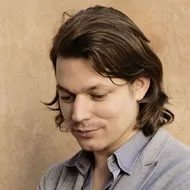
For several years now, the French pianist David Fray has been among the stars of the younger generation. Born in 1981 in Tarbes (southern France), he studied at the Conservatoire national supérieur de Musique et de Danse in Paris with Jacques Rouvier, and was supported by eminent artists such as Dmitri Bashkirov, Paul Badura-Skoda, Christoph Eschenbach and Pierre Boulez. His choice of repertoire reflects his particular affinity for the works of the great German and Austrian composers Bach, Haydn, Mozart, Schubert, Schumann and Brahms. David Fray's recordings have been unanimously praised by the critics and honoured with awards such as the ECHO Klassik (2008 and 2009). At the beginning of 2010 he received the French music prize Victoires de la Musique Classique in the category "Instrumentalist of the Year". David Fray is an exclusive artist with Erato / Warner Classics and has recorded numerous albums.
You began playing the piano at the age of four. Can you remember that time, and how it came about?
It was a decision made by my parents, and they did the same with my older brother. At the age of four, they decided to send us to a private school for solfège, music theory and piano. For me, it was more than just a hobby. It became quite important. It was not really my own wish, I would say. And my parents were not musicians at all, they were just music lovers, so they did not expect to have a professional musician in the family.
Did you choose the instrument yourself, or did your parents choose it for you?
Yes, they more or less chose the piano, because we had a piano at home.
And your brother?
For my brother too, but he then also played classical guitar. He is not a professional musician.
I have read that you describe Wilhelm Kempff as your role model. Is that true? And why?
In a way he really is a role model, because he has all the qualities I would like to have and which I somehow do not yet have. The sound of Wilhelm Kempff is something very special to me. Of course, sound is important for a musician, but it is not only about a beautiful sound. Sound is only the realisation of expression and a musical idea. For some pieces, the sound should sometimes not be so beautiful at all. So we have to work on the quality of the sound, but even more on which specific sound a particular work requires. As far as the quality of sound and the qualities of singing are concerned, I think that is my favourite part of the work. I try to make the piano a lyrical instrument, and also a speaking instrument. And I think Kempff realises both superbly: the rigour and the poetry. And if one day I can have both qualities in the same way, I will be a happy musician.
But are you not yet a happy musician?
Perhaps I am afraid that if I become a happy musician, I will stop. Perhaps the only reason I carry on is that I am not satisfied.
But is being happy the same as being satisfied?
You are right, one can be happy and dissatisfied. Well, I am not the type who is happy and dissatisfied. But there are some moments when one is at least satisfied. Sometimes I have beautiful moments on stage. It happens.
But those are rare, aren't they? Or are they frequent?
Sometimes it is just five minutes during a concert. Sometimes it is a little more, sometimes less. It depends. Kempff is also a model of moderation, which I am not. And one day I would like to be able to achieve this kind of balance. I like the fact that Kempff is the anti-excessive player. There is no excess in Kempff's playing, so some people might find it a little boring. I don't know, because his fast movements are not very fast and his slow movements are not very slow, so the differences between slow and fast are really quite moderate. But I think that, especially for the classical repertoire, it is very, very effective. And that speaking quality he has impresses me greatly, too. I remember discovering Kempff at the home of friends of my parents. They were having dinner, and they had a wonderful room for listening to music. So I spent the whole night getting hold of a few CDs. And there was this box, I remember, Wilhelm Kempff, Beethoven sonatas. I put on any sonata, and immediately something drew me in. Because I had the feeling that something important was going on in terms of integrity.
You have made a name for yourself with your Bach interpretations. What is special about Bach's music for you personally?
It is a language that has a certain formal perfection. Formal perfection is nothing without expression, without emotion. And there is also this expressive power that one finds. I think Bach is always a point to which we return, because he is also very healthy for our ears. He forgives nothing. With Bach, you cannot cheat. Firstly in terms of instrumental technique, and secondly in terms of the music. As a pianist, you cannot use pedal effects and other devices with Bach to cover things up. It is of course also problematic, because Bach did not compose for the instrument I play. That makes my work all the more difficult. In Bach's music I simply find everything I need as a human being: beauty, feeling, humanity, and also perfection of language. It touches me deeply. And that is the music I need primarily as a listener, not really only as a player. I needed it first as a listener more than as a player, because I did not play much Bach until I was perhaps 22 years old. I actually started quite late, because I first had to learn a great many things in order to at least try to enter this language, since it is very complicated, and even when I more or less knew what I wanted from the music, I could not turn it into something concrete.
If Bach were still alive, what would you ask him?
I would hide. I think I would first want to hear how he used to play his own pieces. Yes, of course. How he conducted his own pieces, what kind of musicians he chose for his interpretations. That would help.
It is important to you that the audience is quiet and very concentrated.
Yes, because I really have the impression that the quality of silence is one of the most important tools we need to build an interpretation. And the audience is largely responsible for a good performance, simply through the way it reacts to the music and how it listens to it. Actually, it is not only a question of silence. There are different kinds of silence. If I may dare to say so, not every silence is equally good. Some silence can be a little boring. Some silence is full of tension; you feel that the people are there and that you really have them, and that is a very strong and pleasant feeling, when you notice that people are truly travelling this journey with you, that they really follow you. That is one of the most beautiful aspects of my work. When you have a very cooperative audience.
And how do you choose the works you play?
In general, I choose them. Sometimes people ask me, and then I decide whether I feel I can do it well or not. But yes, in general it is my decision, because I am rather slow, so I need some time to learn a piece. I want to spend time on a piece that I will play my whole life. But above all, I must love the piece, I must feel that I have a connection to it and that I can have an interesting process with it. There are many pieces that I like, but I do not play them yet, because I feel it is not the right moment.
What does success mean to you?
What is success? Whether success has to do with career, the audience or the journalists, I do not know. It is in any case nothing one can control. And so I did not really have the impression that I am that successful. I have no people waiting for me in front of my house, and that is fine. But real success, what is interesting, is the achievement one sometimes manages when playing certain pieces. Sometimes I feel that I have found a way into a piece, and that is very, very satisfying. For me, then, the only possible success is the work one does on the music. The rest does not depend on us.
And what other passions do you have besides music?
Apart from music? Yes, I mean, music is of course the main thing in my life, but I would say that I am generally interested in every form of art. That is what I need in order to nourish myself. For me it is already not easy to lead a normal life alongside my job. So if I manage to have a family life, that is good too. If I can spend a little time at home. And that is something that also nourishes me, because one cannot spend one's whole life in airports, hotels and concert halls. I do not think that is a good life. I like it in a certain proportion. But when it is too much, one has no time to reflect or simply to enjoy the moment. In any case, I never wanted to be a machine. I have played a great deal in the last month, I must say. And sometimes it was also very beautiful.
And sometimes one has to rest in order to regain the energy one needs.
Yes, yes. To clear one's head. It is not as if the concert gives you energy for the next concert and so on. I do not work that way. I also sometimes have to pause and think a little. Simply about what I am doing and whether I am doing it well or not.
You performed here at the Verbier Festival. How did you like it?
I had three different programmes in four days. Unfortunately I saw nothing of Verbier itself. It is hard, but that is the reality. That is what our life is about, and people think that we travel and have fun. But the atmosphere here is a little different from that in a city, because here we musicians are all somehow together, and I had the opportunity to meet some colleagues whom I otherwise never see. The dinners, and the fact that we can listen to one another, create a connection, a small bubble shared by all the musicians together. I met people I did not know before, because everyone is a little on their own and one does not really meet. I enjoyed that very much here in Verbier!
Interview by Florian Schär | Classicpoint.net | 02.08.2024
© Jean-Baptiste Millot Warner Classics