

« Connecting Worlds »
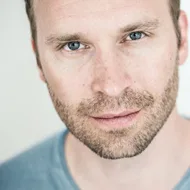
Christian Knüsel has been artistic director and conductor of the Neues Orchester Basel (NOB) since 2012. After training in teaching, concert and soloist diplomas in Switzerland, the Netherlands and the USA, he studied conducting, musicology and philosophy. Recently, he was selected by the Moravian Philharmonic as Principal Guest Conductor to develop one of the most traditional orchestras in the Czech Republic from the 20/21 season onwards.
In 2018, the Dienemann Foundation honoured him with a prestigious special prize for his work as a conductor, for his nuanced concert programmes and innovative formats. On 2 September 2020, he will appear with the NOB in a special concert in Basel, where the significant music hall of the Stadtcasino Basel will be reopened after four years of construction.
In the following interview, Christian Knüsel talks about the reopening of the Stadtcasino Basel, the special programme for the reopening and his time with the Moravian Philharmonic.
Classicpoint.net: How did the idea for this concert evening on “Music&Architecture” come about?
The reopening of the Stadtcasino is a major event, and the music hall is valued worldwide for its acoustics. It seemed obvious to place the hall at the centre. Concerts should not take place in an ivory tower. As a listener, I feel more directly addressed when a programme has a distinctive character and, for example, refers to a social event.
The programme is tailored to this venue and the moment of reopening. Are such cross-references an opportunity for more diverse concert programmes?
Absolutely. Well-known pieces are regarded as masterpieces, they are placed on a pedestal and seem untouchable. But behind the music stands a composer with his life and his ideas; every work has its own story. If it succeeds in bringing the context back to life, the works are also perceived differently. That is why at the NOB we chose the season theme “Connecting Worlds” and, in our concerts, create cross-references to other disciplines, as here to architecture.
As at the opening of the music hall in 1876, Mozart’s Overture to The Magic Flute and Beethoven’s Ninth Symphony will be performed. In addition, the audience will receive exclusive insights into the development of the project “Extension of the Stadtcasino Basel”. What correspondences exist between architecture and music?
Indeed, there are essential parallels, if only in terminology. Many musical terms are borrowed from architecture; in music, too, we speak of form and material, of motifs and colours. Musicians and architects both work with historical material and reinterpret it in the here and now. The architects Herzog & de Meuron placed the 1876 music hall at the centre of their project as an independent building volume. That is why we also wanted to refer musically to the period of its creation, and thus to the opening concert of 1876.
What was the exchange with the architects like in designing this programme?
The conversations and discussions with Andreas Fries, the partner responsible at Herzog & de Meuron, were very inspiring. During walks around the construction site, I gained further insights. From all these impressions, I tried to develop a coherent concert programme that playfully picks up the parallels between architecture and music while still giving each discipline its own space.
Commissioned by the NOB, the renowned Swiss composer Daniel Schnyder, who lives in New York, is writing a sounding commentary on Beethoven’s visionary work for this occasion. How did this come about?
Beethoven’s Ninth was formative for music history like hardly any other work. To exaggerate slightly, one could say that all subsequent composers of symphonic works had to face the decision either to build on it or to find their own concept, so to speak, to compose against the Ninth. The significance of Beethoven’s work goes beyond the musical; the Ninth is also a fervent manifesto of ideals that unite humanity. It has by now become a real brand, a label: as the official European anthem, as part of the UNESCO World Heritage, and as a favourite piece for important occasions such as the fall of the Berlin Wall. All the more important it seemed to us that Schnyder’s work also makes room for a contemporary, tongue-in-cheek commentary.
Did the NOB influence the compositional process?
It was important to me that the familiar image of the Ninth should not be cemented, but that lesser-known aspects should come to light. The Ninth is full of remarkable passages, for example when, in the development section of the first movement, Beethoven suddenly introduces plucked double-bass offbeats into a static, tense sound surface, thereby creating unexpected drive and groove. It was therefore important to me to find a composer who, like Daniel Schnyder, is at home in both classical music and jazz.
Does Schnyder make direct reference to the Ninth in his composition?
Yes, Schnyder’s work reflects the symphony with many references; for instance, his piece also traces the path from D minor to D major. My central concern, however, was that Schnyder’s work should set a cheerful, light counterpoint to the weighty reception of the Ninth. And that the composer should take his cue from the architects’ approach. As one can see at first glance, Herzog & de Meuron take up the language of the existing building. I found it appealing if Schnyder, in his piece, likewise took up motifs and techniques of Beethoven’s, in the way the architects have handled motifs of the historical building fabric.
No easy starting point. How did Schnyder respond to these requirements?
With great interest and much humour. Daniel is very skilled at handling such tasks, so that, despite all the cross-references, an entirely independent work has emerged. That was the idea from the very beginning.
It will be interesting to find out how these different musical worlds come across in the newly reopened concert hall.
Different worlds are part of the DNA of the Stadtcasino music hall. It is famous not only for its outstanding acoustics but also for its eventful history: 100 years ago, the first Swiss Trade Fair (Schweizerische Mustermesse) took place here; masked balls and boxing matches were held here too; indeed, the foundation stone of the State of Israel was laid in the Basel music hall.
What is your own relationship to the hall? What personal experiences do you associate with this place?
As an orchestral musician, I have played a number of concerts; three times I have appeared as a soloist in the music hall, most recently with the Swiss Army Band. I remember it precisely: it was on an especially hot early summer day, with tropical temperatures in the hall. Thankfully, these times will hopefully soon be over thanks to modern hall air conditioning.
Renovation is needed not only for concert halls; the classical music scene also needs fresh impetus. How can sustainable renewal be achieved?
Tradition must be continually questioned if it is to remain alive. Equally important is trust in the works. What has quality and substance remains relevant. Numerous works by Beethoven were initially rejected, as was the Eiffel Tower, to stay with the parallels between architecture and music. Innovation is important: new works, new venues, new forms of presentation, but the most important thing remains what goes on in the minds and hearts of the musicians. Passion and devotion are contagious, especially when a new unity can emerge in the highly developed interplay of classical music. The question for a vibrant music scene would therefore be: how can making music be anchored sustainably in society?
What are your conclusions?
It seems to me that our music scene can learn a great deal from other fields and from earlier times. Together with the NOB, I am launching a large-scale project on this subject. If one wishes, one could also relate this initiative back to the Ninth: to the ideal of fulfilment and personal growth through music, and to Beethoven’s utopia of a music that unites people.
You were selected by the Moravian Philharmonic, where Gustav Mahler once conducted, for the position of Principal Guest Conductor. In this two-year selection process among international guest conductors, did your competence for innovative concert programmes also play a role?
Perhaps for the invitation, but not in the subsequent course. I took over a programme proposal from the artistic director and conducted two concerts with the orchestra. Conceptual considerations recede into the background when working with the musicians; the immediate exchange is what counts. It is like love: if you are lucky, the spark jumps across.
Interview by Florian Schär | Classicpoint.net | 1 August 2020
More interviews
All interviews →


