

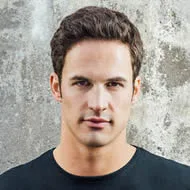
« The clarinet holds a special status in the Viennese music scene. »
Andreas Ottensamer is an Austrian clarinettist of international renown who belongs to a family of three principal clarinettists. Since March 2011 he has held the position of principal clarinettist with the Berlin Philharmonic.
Classicpoint.net: You first learned the piano, began studying the cello at the age of 10 and only switched to the clarinet at 12. Nine years later you were already principal clarinettist of the Berlin Philharmonic. How is that possible?
That is the great advantage of growing up in a musical environment and absorbing music unconsciously as a small child. Development can show very rapid progress – but of course one cannot get around hard work and discipline.
Your father was principal clarinettist with the Vienna Philharmonic, and your brother still is. What was it like in childhood – did you always practise at the same time and for the same length of time as your brother?
No, each of us had our own rhythm – we both also had many other interests that we wanted to fit into the day, so there was always a lot going on at home. Of course, we often came together to make music and, for example, played duets together.
You belong to the younger generation in the Berlin Philharmonic. Are there friendship groups within the orchestra that cut across age?
Friendships are divided in very different ways, regardless of age or other factors – just as in "real life".
You come from Austria and were born with a typical Viennese sound concept. How would you describe it?
I think it is wonderful to have grown up with a strong sense of tradition. The clarinet holds a special status in the Viennese music scene. The Viennese sound is characterised by a particularly soft, dark and full-bodied tone, and it also influences phrasing and musical interpretation, which of course is then worked out individually.
Your mother is Hungarian. You also play a great deal of Hungarian music. What do these roots mean to you?
I find Hungarian folk music incredibly interesting and exciting. In this music the emotional and, above all, the melancholic side predominates.
I was delighted to perform three times in Budapest this season and so also to be able to enjoy the fantastic food.
The tabloid press writes mainly about, and with great enthusiasm about, your appearance. Does that bother you sometimes?
No – one can't influence what is written there anyway.
You are a passionate footballer and also play tennis and golf and go skiing. Have you ever had sports injuries that forced you to take a break from your instrument?
Sport is the ideal balance to music for me. Fortunately, I have never had any serious injuries. I played tennis and was standing on skis even before I made music. The risk of injury when you train regularly in sport is of course much lower than for someone who suddenly takes up these sports from one day to the next.
What are your goals and visions for the next 10 years?
I cannot answer that; one never knows what will come. I simply hope to be happy with what I do.
Interview by Florian Schär | Classicpoint.net | 1.6.2018
© Photo: Katja Ruge / Decca
More interviews
All interviews →


