

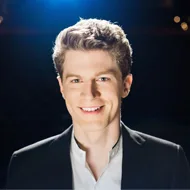
« My motto: cool head, cold fingers, warm heart! »
The pianist Alexander Krichel, born in Hamburg in 1989, has already released six albums, five of them on Sony Classical. Trained in Hanover with Vladimir Krainev and in London at the Royal College of Music with Dmitri Alexeev, he was named “Newcomer of the Year” at the ECHO Klassik awards in 2013 for his debut CD.
Since then, Alexander Krichel has been at home on both the national and international stage: he has given concerts at the Philharmonie and the Konzerthaus Berlin, at the Elbphilharmonie Hamburg and the Laeiszhalle, at the Herkulessaal and Prinzregententheater in Munich, at the Cologne Philharmonie, the Tonhalle Zurich, St Martin in the Fields London and the St Petersburg Philharmonic, as well as in many other cities.
Classicpoint.net: Can you remember your first conscious encounter with a piano or piano music?
We always had a piano at home, as my mother had played the piano as a child. I myself was actually always just tinkering about a little, until, as a six-year-old with an excess of energy, I was to discover the piano as an outlet for it. It all started when I took lessons with a piano teacher who had just come from St Petersburg to Hamburg and spoke not a word of German. I couldn't speak Russian either. So she had no choice but to teach me music the way a mother teaches her child its mother tongue: directly, idiomatically and without detours. From the very beginning, music was a language for me with which I could express myself!
You passed the entrance examination for the gifted-mathematics programme at a university in Hamburg with distinction, and yet you then chose to study music. Why?
As a child I had many interests. As you say, alongside school I already studied mathematics and physics, and took part in foreign-language competitions and in Jugend Forscht in biology. Mathematics always fascinated me, just as music did. However, mathematics lacked one level: whereas its fascination is purely cognitive, in music there is a strong identification with the thing itself and a high degree of emotionality, which is why, in this “head-or-heart decision”, I had to listen to my heart after all. I simply knew that I could not live without music.
How much mathematics is there in music?
Musical architecture is often mathematical. This can be observed especially in early music, but also in new music. When working out or analysing works, a mathematical approach is certainly often an advantage; however, I try to quickly “forget” what I have worked out when I step onto the stage with the works. So, at the moment I step on stage, I assume that everything I know and have learned about the piece is “somewhere in my subconscious anyway”, and I am fully and completely in a state in which I want to rediscover the music and sense it intuitively and emotionally. My motto: cool head, cold fingers, warm heart!
To what extent do you still engage with mathematics and the natural sciences today?
Admittedly, I now deal with mathematics very little compared with the time of my “junior studies”. I often use what I have learned, but it is then of a very general and unconscious nature; often I only notice it myself when my friends point out to me that they cannot quite follow certain lines of thought because I skip certain (mathematical) steps. I am very interested in the natural sciences and still enjoy being surprised by new inventions.
As an analytically minded person, what is your view of contemporary music?
Admittedly, I do not see myself as an analytical person at all. Of course I have a head on my shoulders, but I always make the big and important decisions with my gut (or rather with my heart). It is always important to me to be at peace with myself emotionally, and so I live by the ideology that I often do not do things when they would be analytically correct, but when they feel right to me.
I have exactly the same relationship with contemporary music. I find some of the new developments interesting and am impressed by what people are capable of composing. Especially because I compose myself! Many contemporary composers, however, in their sheer lust for discovery, forget what I mentioned earlier: the emotional message. They feel so much pressure to create something entirely new, something entirely their own, that nobody before them has ever written, that they compose things that often no longer give even us musicians any pleasure, let alone the audience.
I once had a telling experience at the premiere of a new work by a not unknown composer: even after two weeks of intensive engagement with the piece, despite all my attempts at emotional engagement, mathematics and analysis, I did not feel that I had understood the piece. In such cases I then ask myself: what is the audience, who as a rule have not studied music and who also could not spend two weeks with the piece but are hearing it for the first time, supposed to make of this composition at a concert?
Which era is closest to you personally, and why?
I am not one of those musicians who like to limit themselves to one era or one composer as a speciality. Even before my studies – and then all the more during them – it was always very important to me to learn as much repertoire as possible from different eras, so as to know more about the composer, the period and its development. My studies with Vladimir Krainev and the associated Neuhaus school, from which pianists such as Sviatoslav Richter, Emil Gilels and Radu Lupu also come, confirmed me in this. These four great pianists, whom I definitely see as role models, did not allow themselves to be pigeonholed, but followed their curiosity and artistic intuition, and I too want to try to walk this path. I can find something very personal in every era, and depending on what stage of life or emotional phase I am in at the moment, I prefer one or the other. This is reflected in my concert that I will play at the Tonhalle Maag in Zurich (Beethoven, Liszt, Wagner and Ravel), but also in my discography: from Mozart, Hummel, Beethoven, Chopin and Liszt through Schumann, Schubert, Mendelssohn and Rachmaninov to Ravel, everything is included. And I am far from finished!
You have also composed yourself. Do you still compose, and what experiences have you had with it?
I have composed from time to time, but really only as a leisure activity. It was an interesting change not only to interpret, but to create something entirely new from scratch. I have written a lot especially for string quartet and orchestra, but so far have published only a single composition for solo piano. It is called “Lullaby”, which I dedicated to a close acquaintance who was a great fan of film music. This composition has recently attracted considerable attention, as an American film producer became aware of it, and I have now released my first music video with precisely this piece.
You are involved in projects that give children and young people access to classical music. Can you tell us about these projects?
So-called education projects are essential for classical music! I personally run them at my own festival, in cooperation with many concert halls, but also for “Rhapsody in School”: when I have a concert and the timing allows, I often go to general schools in the morning and play a little for the pupils. We talk about me, my profession, how I became a pianist, and whether I ever get homesick when I am travelling so much. Once you have warmed up to the children, which as a rule takes less than five minutes, you notice that they want to know a lot. Most children are not uninterested in classical music because they find it boring; they simply have no points of contact with our world. Again and again I see how a large proportion of these children then sit in a concert the next day. That is exactly where we want to be: to inspire children and young people so much for music that they independently decide: “I want to experience this in a proper concert too!”
You are still young. What visions do you have for our world?
The world is currently in upheaval; new things are happening in many corners, and new movements are taking shape. Some things are moving in a very positive direction, others absolutely not. I wish that every person, when deciding whom to sympathise with, had the ability to listen to their heart and did not let themselves be swept away by the simple rhetoric of a few. People act most strongly when they stand behind something with their heart, and that is my vision for our world.
What do you wish for your career as a pianist?
I wish that I continue to be given the opportunity to share my art with my audience in concerts. I also hope that, even at 30, I can keep developing, learn new repertoire, discover new things in music, and never lose the energy I currently feel when I sit at the piano.
Interview by Florian Schär | Classicpoint.net | 1 December 2019
Photographer: © Henning Ross
More interviews
All interviews →


