

« Modern & Klassik war in der englischen Pampa ziemlich gewagt! »
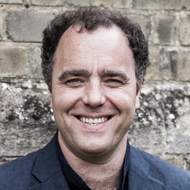
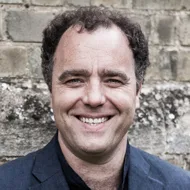
Adrian Brendel is one of the most versatile and original cellists of his generation and has travelled the world as a soloist, chamber musician and teacher. His early immersion in the core classical repertoire sparked a lasting fascination, which led to encounters with many outstanding musicians at the most renowned festivals and concert halls around the world. His discovery of contemporary music through the works of Kurtág, Kagel and Ligeti in his teenage years opened up a new and vital path, which he continues to pursue with great enthusiasm alongside his passion for jazz and world music. Adrian Brendel is the son of the world-renowned pianist Alfred Brendel and until 2018 directed the festival «Music at Plush» in Dorset, England. He is a permanent member of the Nash Ensemble.
In the following interview, Adrian Brendel talks about his passion for contemporary music, his father Alfred Brendel and the significance of the coronavirus for the concert industry.
Classicpoint.net: You grew up in a musical family with a famous father (Alfred Brendel). What were your first formative experiences with music?
Concert visits were extremely exciting for me as a child, especially those in which my father was performing. I was able to attend from a very young age, and I still remember very well some Mozart piano concertos with Neville Marriner and the ‘Academy of St Martin in the Fields’. At the age of 6 I received a cassette with two of these wonderful works – K482 and K488 – which are still very important to me today. Around that time there was also Beethoven, Schubert, Liszt and chamber music with Heinz Holliger, who improvised a little at the piano with me shortly before his concert. I have never forgotten that! Bergmann’s Magic Flute was also incredibly impressive.
You also learnt the piano first. How did you come to the cello?
As a pianist I always struggled to play polyphonically well. As a child, the thought of wanting to play something different from my father certainly played a role too. At 6 I had my first cello lessons, and then things moved on quickly. Nowadays I somewhat regret my clumsiness at the piano, but I do eventually somehow reach the final chord.
How is your relationship with your father? In what role was he a role model, and what did you want to do differently?
We get on very well, perhaps also because we are quite different. I realised fairly early on that imitating him was pointless. It is astonishing with what dedication he led his life and what he was able to achieve as a soloist and writer. I am somewhat different – more spontaneous and mainly occupied with musical collaborations. There are some things that bind us closely – watching films, discussing recordings, listening to new music, visiting exhibitions. Nevertheless, there are of course gaps. Sustaining such a life cost something – I often did not see him for long stretches. It is important to me to be more present for Nico and Lucas (5 and 3).
You are also enthusiastic about contemporary music, as well as jazz and world music. Is this a conscious positioning away from your father, who never really took an interest in it?
Not really. At the age of 12 I heard a jazz concert with McCoy Tyner in London and was simply completely blown away. Shortly afterwards there was a band from Cuba with Chucho Valdés, and Ali Farka Touré with Ry Cooder. That was music that meant so much more to me than the pop and rock bands that did the rounds at my school. I knew that I wanted to find something else alongside classical music – a new world opened up. A few years later, when I attended several concerts by the London Sinfonietta, contemporary music came into the picture for the first time. At 17 I was able to study with the composer György Kurtág for the first time, which significantly developed my interest. As a student in Cologne I was able to experience Siegfried Palm, Kagel and many other great figures of modernism.
You are artistic director of the festival «Music at Plush», which takes place every summer in Dorset (England). What distinguishes this festival?
Plush began in 1995 and from the outset was devoted to giving chamber music interesting and often unusual settings. Mostly this meant combining modern and classical music, sometimes also crossing genres into improvisation, jazz or world music within the same programme. Today this no longer sounds so new, but back then it was rather daring in the English countryside! I ended my artistic direction there in 2018 and very fondly remember many exciting projects. Past programmes can be found at plushfestival.com.
What have you been doing during these months of the Corona period?
My wife is a journalist at the BBC and has a lot of work to do, so I am often occupied with the children – mostly very happily! I teach online, otherwise my diary looks rather dusty. Without concerts, I ultimately tried to learn some new solo works and to listen to and see new things. At the moment I am particularly enthusiastic about Handel, Zelenka, Scarlatti, Haydn, and contemporary music by Veress, Brett Dean, Knussen and Harvey. While cooking it is always jazz – Brad Mehldau, John Taylor and Kenny Wheeler, Oscar Peterson and Root 70.
Otherwise we often go for walks, watch films, and talk with family and friends via Zoom. Unfortunately I currently only find time to read occasionally, as I rarely have enough concentration in the evening. Only the daily dreadful political statements from England and the USA – we now spare ourselves these as far as possible.
Do you think that this virus could bring about lasting change in the field of concert events?
Let's see. Even without Corona it was a complicated time in our field. Where is contemporary music heading? Is there an oversupply? How does a young musician today build a fulfilling career? Perhaps we have become a little too self-satisfied in our field. Classical music has always remained rather conservative, yet it would be interesting to try out other kinds of concerts. If more concert promoters could find the courage to really think ‘out of the box’, I would in principle be very much in favour. Here in England, however, we must first do everything possible to establish reasonable support for music education in schools. The situation has become critical.
You had planned a concert tour with the Nash Ensemble, which then had to be cancelled. Have the concerts been postponed?
I very much hope that our Nash Ensemble tour can take place soon. Everything is up in the air. I fear we will have to wait a little longer until the situation returns to some normality.
What are your next projects?
This year I have several recording projects in preparation, with the Nash Ensemble and as a soloist. Otherwise I am slowly beginning to develop a new festival idea. For this there is, exceptionally, a little time! I teach online at the Royal Academy, Guildhall and Yehudi Menuhin School. Concerts are hard to find until October.
What are your passions besides music?
I very much enjoy doing and watching sport. Formerly a lot of football, now more tennis, swimming, skiing once a year and cricket, otherwise cooking, films, books. After all, the best thing is spending time with good friends and family.
Interview by Florian Schär | Classicpoint.net | 3.06.2020
Photography: © Jack Liebeck
More interviews
All interviews →


