

Eduard Strauss
1835–1916
Life
Eduard Strauss was born on 15 March 1835 in the Leopoldstadt, today part of Vienna, and died on 28 December 1916 in Vienna. As the youngest son of Johann Strauss I, he grew up in an environment that shaped Viennese dance music for decades. He initially aspired to a diplomatic career, but was then persuaded by family members to turn to music. He learned the harp, violin and piano, and in 1855 he appeared as harpist in the Strauss Orchestra.
From 1862 he led the orchestra jointly with his brothers Johann and Josef. After Josef's death in 1870 he continued to lead the band on his own and shaped it over more than three decades. In 1872 he received the title of k. k. Hofballmusik-Direktor; some sources give 1882 instead. With his own orchestra he undertook extensive concert tours through Europe, to America and to Russia. In 1901 he disbanded the orchestra and withdrew into private life.
Works and Style
As a composer, Eduard Strauss clearly stood in the shadow of his brothers and his father. His output consists above all of waltzes, polkas, quadrilles and marches, several hundred pieces in all. His style remained independent and did not seek to imitate the works of his brothers. Among his best-known pieces are the fast polka "Bahn frei!" Op. 45, the polka "Mit Dampf!" Op. 70 and the waltz "Doctrinen" Op. 79.
Well-known Works
The polkas he wrote for the Strauss Orchestra are especially popular, including "Bahn frei!" from 1869 and the polka française "Die Biene" Op. 54. Alongside his own compositions, his repertoire shows how closely he felt bound to the family's legacy: the concert programmes of his band combined dance music from the 18th and 19th centuries with new premieres from the circle around his brother Johann.
Concert Life Today
Today Eduard Strauss is heard above all in New Year and summer programmes. In Jena the Jenaer Philharmonie under Daniel Spaw performs a programme in the Volkshaus that includes Johann Strauss II alongside Eduard and Josef Strauss, as well as Lehár and Ziehrer; the same programme is heard at the Kulturhaus Weissenfels, there with Clemens Fieguth as soloist. In Munich he can be heard at the New Year's matinee in the Cuvilliés-Theater in the Residenz, and at the Bregenz Festival House (Seestudio) he features in the summer programme "Walzer, Polka, Lebenslust!" alongside Offenbach and Johann Strauss.
In Switzerland and Germany, New Year's concerts are among the regular fixtures. The Stadtorchester Solothurn, the argovia philharmonic in Aarau and in Baden, and the Heidelberger Neujahrskonzerte at the Konzerthaus Stadthalle offer waltz and operetta programmes that are close to the Strauss repertoire. In Hamburg the Wiener Johann Strauss Orchester under Johannes Wildner can be heard at the Elbphilharmonie, though there with a focus on Johann Strauss II.
Upcoming concerts featuring works by Eduard Strauss
Friday 1 January
18:00New Year's ConcertPhilharmonisches Orchester Heidelberg Dietger Holm (Leitung)Konzerthaus Stadthalle Heidelberg18:00Jenaer Philharmonie, Daniel Spaw (conductor)Jenaer Philharmonie Daniel Spaw (Leitung)Volkshaus, JenaSaturday 2 January
20:00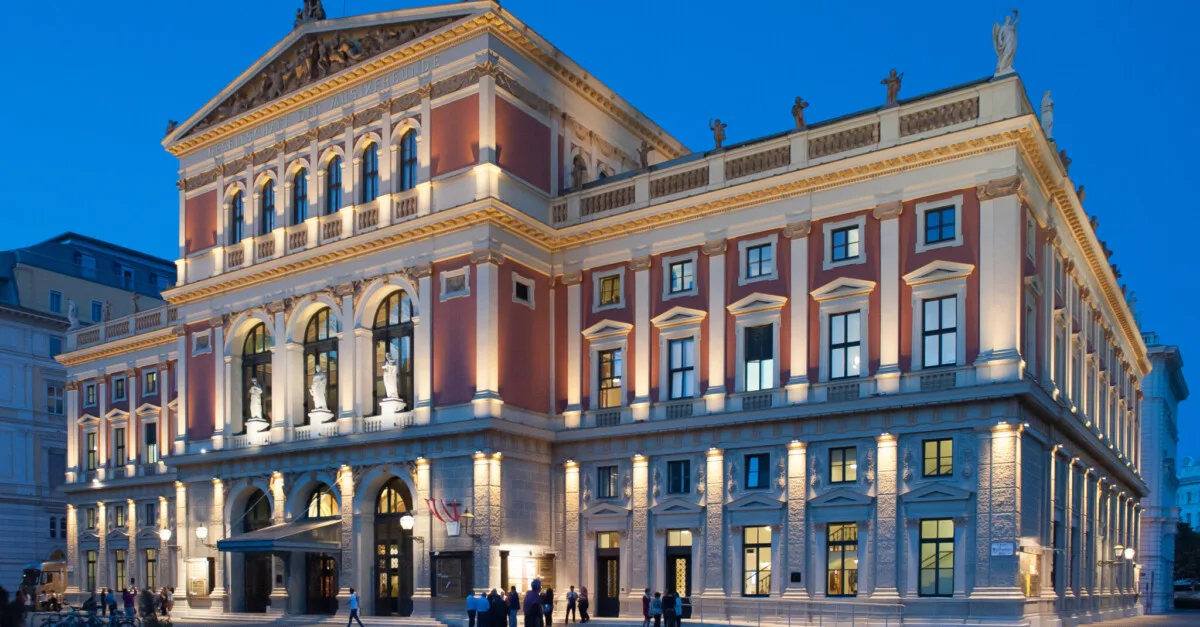 Philharmonic Orchestra Győr, Michael Maciaszczyk (conductor)Philharmonisches Orchester Győr Michael Maciaszczyk (Leitung)Musikverein Wien