

Dietrich Buxtehude
1637–1707
Life
Dietrich Buxtehude was probably born around 1637 in Helsingborg, then Danish. His father was an organist, and so the son grew up early in church music. He first worked in the same role in Helsingborg and Helsingør before taking up the post of organist at the Marienkirche in Lübeck in 1668. There he succeeded Franz Tunder and expanded his series of Abendmusiken, non-liturgical concerts, to great renown. Johann Sebastian Bach travelled to Lübeck in 1705 specifically to meet the organist and hear his concerts.
Little is recorded about his biography. What is certain is that for almost four decades he decisively shaped the musical life of the Hanseatic city and influenced a whole generation of musicians with his style. His name also appears in the form Dietrich.
Works and Style
Although his post did not require vocal music, it forms the greater part of his surviving output. An important line of transmission we owe to the collection of Gustaf Düben, court Kapellmeister in Stockholm. During his lifetime, mainly trio sonatas for strings were published, written in the freely fantasising stylus phantasticus and often sounding improvised.
His fame rests above all, however, on his organ works. Preludes, toccatas and fugues display bold harmony and great formal freedom, and they are regarded as the core of the North German organ school, of which he is the leading representative.
Well-Known Works
A high point of his vocal output is the Membra Jesu nostri (BuxWV 75), seven cantatas from 1680 that meditate on the limbs of the crucified Christ. The texts come from the Cistercian Arnulf of Louvain from the 13th century. Other frequently performed vocal works include his settings of the Magnificat as well as cantatas such as "Nun komm der Heiden Heiland" (BuxWV 21) and "Jesu, meines Lebens Leben" (BuxWV 62). For organ, preludes such as the one in F sharp minor are part of the repertoire of many organists.
Concert Life Today
Buxtehude can regularly be heard in Switzerland. In the Jesuitenkirche Solothurn he appears in the Fermata Musica series, for example in February 2025 together with Bach, Pärt and Heiniger, and in July 2027 in the programme "Musik im Übergang" alongside contemporaries such as Georg Muffat. The Membra Jesu nostri were on the programme at the Martinskirche in Basel in April 2025, and in May 2026 a divertimento for violin, viola d'amore and viola da gamba followed. The Kartäuserkirche Basel offered a trio sonata, Op. 2 No. 7, and the Passacaglia in D minor in October 2025. In its Advent evening concerts, the Kathedrale St. Gallen regularly gives him a place, for example with the chorale "Nun komm der Heiden Heiland".
In Germany Buxtehude can be heard in various venues: in the Paul-Gerhardt-Kirche in Munich, Roderich Kreile presents an organ programme with works by Buxtehude alongside Bach and Fauré in July 2026; in the Hauptkirche St. Katharinen in Hamburg, Sebastian Freitag plays music by Buxtehude, Krebs and Pepping in the same month. In the Konzerthaus Dortmund, Markus Uhl performs the Prelude in F sharp minor in February 2027. The tradition is also present in the Austrian sphere: at the Einsiedler Orgelsommer, which lies in Switzerland, Isaia Ravelli takes part in July 2026.
Upcoming concerts featuring works by Dietrich Buxtehude
Wednesday 24 February
19:30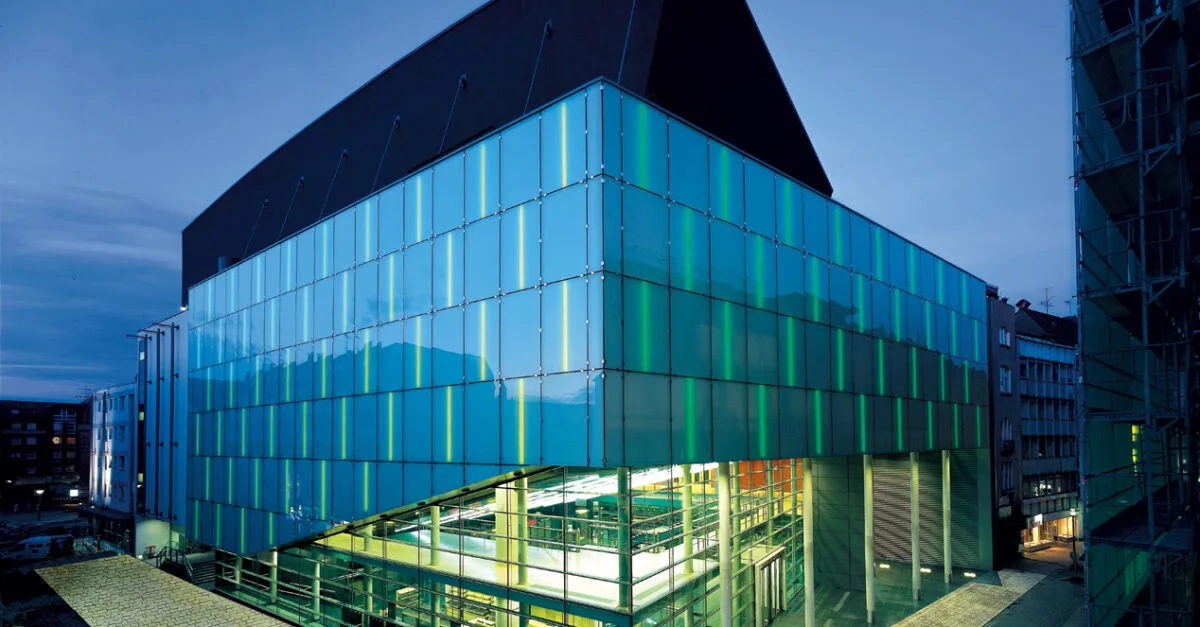 Markus Uhl (organ)Markus Uhl (Orgel)Konzerthaus Dortmund, Dortmund